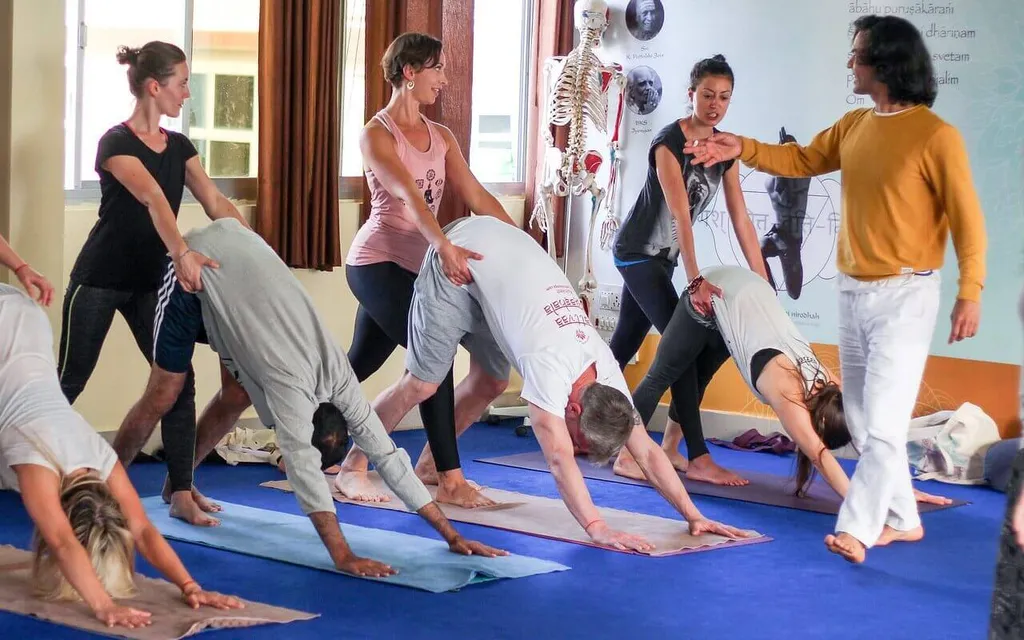
Anatomy is essential because people are getting hurt while doing yoga. Mainly, yoga is dynamic as Ashtanga yoga. And though Ashtanga effectively brings us within and allows us to transcend our physical form in many ways, ultimately, our body is our temple, and it is our vehicle for that transcendence. So in the same way that you would educate yourself on the mechanics of your car to ensure its function, we should also learn about and care for the vehicle that is our physical body.
Ashtanga yoga is often alluring because it is steeped in lineage and rarely veers from tradition. But why isn’t anatomy included in this tradition? There are many possible reasons why Ashtanga yoga, or any traditional form of yoga, was not often taught concerning anatomy. Aside from the obvious western versus the eastern medical view of the human organism, one hypothesis that an Indian teacher explained that people enjoyed was that, firstly, the Indian body is different from the Western body. And secondly that the average body from fifty years ago is other than the middle body today. Until recently, Indians lived similarly to how they have lived for centuries; eating local foods without preservatives or processing, sitting on the floor, working jobs requiring them to be relatively active, etc. This, unfortunately, has all begun to change as Westernisation has spread around the world, accounting for more intake of processed foods laden with chemicals, desk jobs, western illnesses, etc. The average Indian body of the time when Jois was teaching in Mysore was relatively flexible, strong, and limber compared to the contemporary western body. Even the western body of fifty years ago, right around the time industrialized food began to take over, was more lean and flexible. On average, the contemporary western body is stiff, weak, toxic, heavy, and supported by an unhealthy spine. Today, in 2022, western bodies are typically unhealthier than the Asian body and even the Western body that Jois taught in the 1970s. Food for thought.








 See All Reviews


 View Profile